|
Books & the Arts: September 9, 2024
|
|
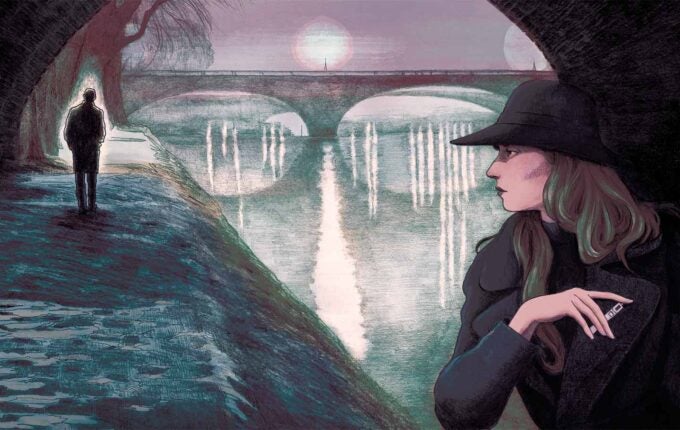 |
From her intricate debut, Telex from Cuba, to her world-spanning epic, The Flamethrowers, Rachel Kushner has always moved through space and time with ease. Her novels examine the radicals in Italy, motorcyclists in the Southwest, art scenesters in New York, the dastardly rule of Fulgencio Batista in Cuba, and the excesses of US empire and the United Fruit Company in Latin America. Her fiction has also often moved between genres, narrative techniques, and literary styles. These globe-trotting and genre-breaking tendencies are all on full display in her latest novel: Creation Lake. Set in contemporary France, Creation Lake is a parody of French novels and political theory, a meditation on the peril of radical politics, an elegy for small European farmers, a work of climate anxiety, and, above all else, a tale of spies and the kinds of lies they tell. Reviewing it for our Fall Books issue, novelist Nicolas Medina Mora finds that it is “a spy novel raised to the second power. It’s not just that Creation Lake is a fiction about a secret agent; it’s that the secrets this agent carries with her are often themselves fictions—she is as much of a novelist as her creator. The result is…a hall of mirrors….If Plato wanted us to step outside the cave of deceitful rhetoric and into the sunlight of transparent truth”, then Rachel Kushner makes an argument for stepping further into the cavern. Read “Rachel Kushner’s Brilliant Avant-Garde Spy Thriller” |
|
| ADVERTISEMENT |
 |
|
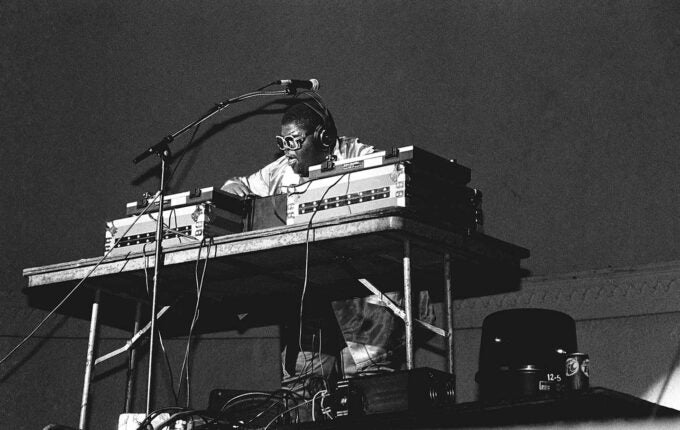 |
When did hip-hop begin? Many insist that its official beginning was in 1973, at a party in the Bronx, when Clive Campbell, better known as DJ Kool Herc, began spinning two copies of a James Brown record together. Soon, emcees around the borough and then the city and then the world were mixing music in a similar fashion and began rapping over it. But others insist that the genre began much earlier—or at least that its roots did. Ahmir Thompson—better known as Questlove, the six-time Grammy-winning cofounder of the Roots—is one of them: “Herc was drawing on existing Jamaican music traditions, like toasting, where Jamaican vocalists performed over American R&B records,” he writes in his new book, Hip-Hop Is History. “But for me, [rap] also draws on traditions in Black music that stretch back at least a decade earlier….None of this should minimize Herc’s party. It’s just that hip-hop didn’t come from one place, and it didn’t go to one place. It went everywhere.” Reviewing his book for Fall Books, Bijan Stephen not only examines Questlove’s history of hip-hop but also considers Questlove’s own role in this history, the way he and the Roots helped remake rap—or at least their small corner of it—in the 1990s and 2000s, and how their own trajectory captures the way hip-hop moved from the margins into the mainstream. “Hip-hop,” Stephen explains, “is our pain turned into art: You either express it or it eventually destroys you. Questlove, of course, understands this intimately. You can feel it thrumming just beneath the surface.” Read “Questlove’s Personal History of Hip-Hop” |
|
| ADVERTISEMENT |
 |
|
|
|
| Support The Nation’s Journalism |
Ensure that progressive, independent journalism encourages debate, foments
change, and lifts up the voices of those fighting for justice continues at a moment
when we need it most. |
|
|
|
 |
| Not yet a subscriber of The Nation? Get one year of unlimited digital access for just $15. |
|
|
| You are subscribed to Books & the Arts. Want to change how you receive these e-mails? You can update your preferences or unsubscribe. |
| Privacy Policy • Advertise • Contact Us |
|
|
© 2024 The Nation
520 8th Ave, New York, NY 10018 |
|
|