|
Books & the Arts: June 17, 2024
|
|
 |
In the 2010s, the developers Harry Macklowe and Gary Barnett raced to build what would become the first of midtown Manhattan’s super-tall, super-skinny luxury high-rises such as now populate West 57th Street. Each sought to outdo the other in terms both of height and the buildings’ offered amenities. Soon many other elevator-packed buildings followed, transforming the very fabric of a once-boisterous neighborhood that was full of tourists and theatergoers but also local life. Writing in Books & the Arts’s June print section, Karrie Jacobs remarks, “The buildings are so tall that they’re hard to miss, but so skinny that they look more like a row of smokestacks. They possess a dystopian weirdness that suggests…they were designed more by software than by human architects—and that the software might have made a miscalculation or two.” Walking along West 57th Street, Jacobs gives us a tour, examining how these pencil-thin towers have altered not just the city’s skyline but its street life too. “What happens to a midtown Manhattan street when it’s remade for people who don’t live or work there,” Jacobs asks, “and who come and go intermittently via the massive black Suburbans and Escalades that are perpetually idling near the front doors?” Read “What’s the Deal With Manhattan’s Pencil-Thin High Rises?” |
|
| ADVERTISEMENT |
 |
|
 |
Joni Mitchell’s songs can be “deeply and poetically personal,” our music critic David Hajdu writes, and yet they “offer a richness of meticulous particulars that, with no pandering or exaggeration, work through universal feelings.” Despite all of the intimacy of a Mitchell song, it is never just about her—but about us as well. At least that is the thesis of a probing new biography of Mitchell by the veteran music writer Ann Powers. Reviewing Traveling: On the Path of Joni Mitchell for Books & the Arts, Hajdu finds that the book makes a convincing case. Evincing a “deep knowledge of Mitchell’s life and work, American musical culture, and popular culture more broadly,” Powers shows how Mitchell’s music always told a larger story about the world that around her. Not since David Yaffe’s Restless Daughter, Hajdu notes, has a writer taken on Mitchell’s intricate and cryptic songs with such surety and insight. Even the most private of lyrics, or most sorrowful of choruses, is rendered accessible to all. Read “Seeing Ourselves in Joni Mitchell” |
|
| ADVERTISEMENT |
 |
|
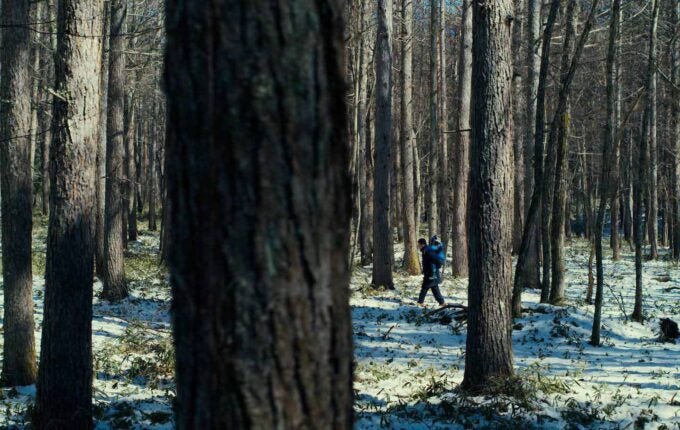 |
| The Inhuman Gaze of “Evil Does Not Exist” |
|
Ryusuke Hamaguchi’s new film, an eco-thriller set in a sylvan Japanese town, explores the messy entanglements of human, machine, and nature that make up planetary existence.
|
| Phoebe Chen |
|
| |
 |
| A Sweeping History of the Black Working Class |
|
By focusing on the Black working class and its long history, Blair LM Kelley’s book, Black Folk, helps tell the larger story of American democracy over the past two and a half centuries.
|
| Robert Greene II |
|
|
|---|
|
 |
| The State of the Gay Bar |
|
A new book explores the phenomenon of gay bar closures and the forms of nightlife that have emerged to replace them.
|
| Daniel Felsenthal |
|
| |
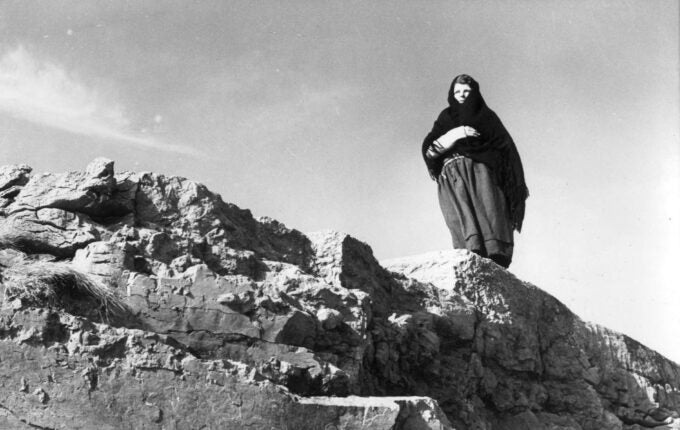 |
| The Imperial Gaze Turns on Britain’s Isles |
|
In Elizabeth O’Connor’s Whale Fall, an encounter between English documentarians and a remote Welsh island community provokes questions of sexual and national identity.
|
| Emmet Fraizer |
|
|
|---|
|
|
| Support The Nation’s Journalism |
Ensure that progressive, independent journalism encourages debate, foments
change, and lifts up the voices of those fighting for justice continues at a moment
when we need it most. |
|
|
|
 |
| Not yet a subscriber of The Nation? Get one year of unlimited digital access for just $15. |
|
|
| You are subscribed to Books & the Arts. Want to change how you receive these e-mails? You can update your preferences or unsubscribe. |
| Privacy Policy • Advertise • Contact Us |
|
|
© 2024 The Nation
520 8th Ave, New York, NY 10018 |
|
|


