|
Books & the Arts: December 18, 2023
|
|
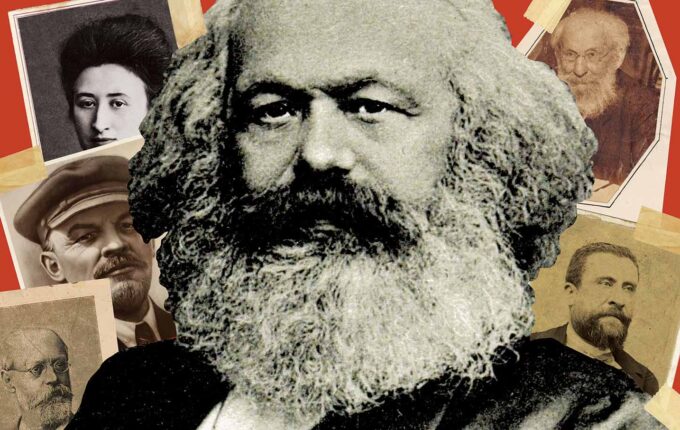
Before there was Marxism, there was just Marx and Engels and a scattering of activists, conspiracists, revolutionaries, and intellectuals committed to a shared cause. How did a set of ideas transform into a global movement and political tradition? How did, in other words, Marxism become Marxism? A new history by Christina Morina, reviewed this week by Peter Gordon, examines some of the figures who made Marxism what it became and both the personal and political reasons why they sought to do so. By doing so, Gordon argues, Morina not only offers a set of portraits of Lenin, Eduard Bernstein, Jean Jaurès, Rosa Luxemburg, and other early Marxist luminaries but also “paints a portrait of Marxism as less than a specific theory than as a shared language and a set of informal dispositions that spawned a variety of competing interpretations.” Read “How Did Marxism Become Marxism?” |
|
| ADVERTISEMENT |
 |
|
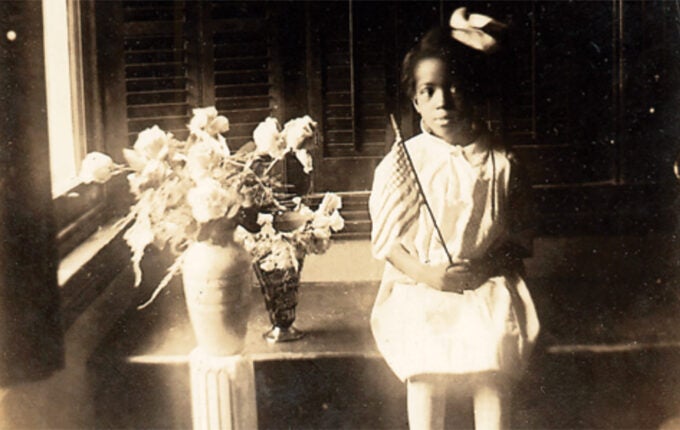 |
Christina Sharpe has long been interested in how slavery and its aftereffects have continued to persist in American life—in particular Black American life. In her book Monstrous Intimacies, she examined how the violence of slavery has continued to haunt the United States, and in In the Wake, she combined meditations from her own life with close readings of contemporary Black art to consider how Black culture has been shaped by “being in” slavery’s “wake.” Now, in her latest book, Ordinary Notes, she offers a lush enmeshment of photography, criticism, and biography to consider how Black art and art about Black America have memorialized the past and present. “Drawing from photographs in her own personal library as well as those found in various archives,” writes Omari Weeks in an essay on the book, “she shows how each picture—especially those featuring Black subjects—always documents a negotiation of power among the people in the photographs, those taking them, and those viewing them.” Read “Christina Sharpe and the Art of Everyday Black Life” |
|
| ADVERTISEMENT |
 |
|
|
| |
 |
| Joan Baez Looks Back |
|
I Am a Noise, a career-spanning documentary, makes it clear that the folk singer was one of the most important political musicians of her generation.
|
| Sarah M. Seltzer |
|
|
|---|
|
|
|
|
| Support The Nation’s Journalism |
Ensure that progressive, independent journalism encourages debate, foments
change, and lifts up the voices of those fighting for justice continues at a moment
when we need it most. |
|
|
|
 |
| Not yet a subscriber of The Nation? Get one year of unlimited digital access for just $15. |
|
|
| You are subscribed to Books & the Arts. Want to change how you receive these e-mails? You can update your preferences or unsubscribe. |
| Privacy Policy • Advertise • Contact Us |
|
|
© 2023 The Nation
520 8th Ave, New York, NY 10018 |
|
|